

Use This Comparison to Narrow the Deck Choice
Start with the site constraints that actually affect ownership: installation timing, relocation plans, weather exposure, traction, maintenance, and long-term permanence. The sections below organize those decision points before getting into the detailed comparison.
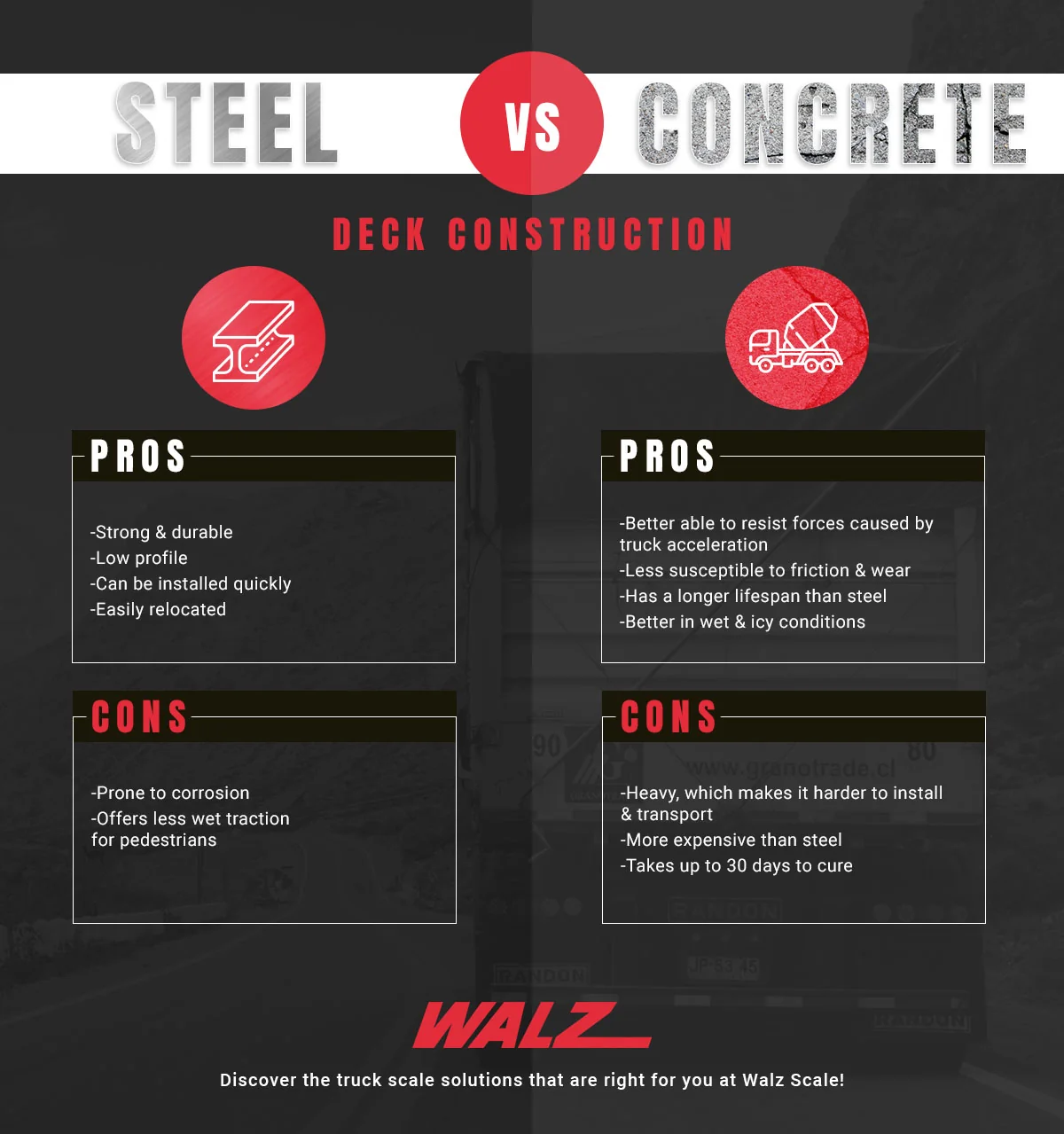
Quick Answer
- Choose a steel deck truck scale when speed, lower initial cost, relocation, expansion, or a lower-profile installation matters most.
- Choose a concrete deck truck scale when the site favors traction, mass, long service life, and lower routine deck maintenance over faster installation.
The best choice is not simply steel versus concrete. It depends on how quickly the scale must be operational, whether the scale may move later, the exposure conditions at the site, pedestrian traffic around the deck, and how the owner weighs initial cost against long-term operating needs.
What Changes Between Steel and Concrete Decks?
The deck is the surface trucks drive across when using a full-length truck scale. Steel and concrete decks can both support accurate truck weighing when the scale is designed, installed, and calibrated correctly. The difference is mainly in installation timing, deck weight, traction, corrosion exposure, transportability, and long-term ownership tradeoffs.
Steel decks are commonly selected for projects that need a scale installed quickly or may need future relocation. Concrete decks are commonly selected where added mass, wet-weather traction, and long service life are more important than speed of installation.
Steel vs. Concrete Deck Comparison
| Decision factor | Steel deck | Concrete deck | How to decide |
|---|---|---|---|
| Initial timeline | Can typically be installed and used faster because there is no concrete cure period. | Requires cure time before regular truck weighing; the source notes about 30 days for full cure. | Use steel when the scale must go live quickly. |
| Relocation or expansion | Easier to relocate or expand compared with a much heavier deck. | Harder to transport and install because of added weight. | Use steel when future site changes are likely. |
| Initial cost pressure | Often lower initial cost. | Often higher initial cost due to weight, handling, and installation requirements. | Use steel when upfront budget is the main constraint. |
| Traction and pedestrian traffic | May offer less wet traction than concrete. | Typically offers better traction in wet or icy conditions. | Use concrete when wet traction around the deck is a priority. |
| Exposure and corrosion | More vulnerable to corrosion when exposed to weather and harsh site conditions. | Not subject to steel deck corrosion in the same way. | Use concrete when corrosion exposure is a central concern. |
| Load distribution and deck mass | Lighter deck construction with customization options such as deck plate choices. | Added mass can help resist forces from truck acceleration and improve load distribution. | Use concrete when mass and long-term deck stability are more valuable than portability. |
| Routine maintenance expectations | May need more attention where corrosion or deck wear is a concern. | Source material notes low maintenance and a longer expected lifespan by roughly five to seven years. | Use concrete when long-term deck upkeep is the primary decision factor. |
When a Steel Deck Makes Sense
A steel deck is often the practical choice when the scale needs to be installed quickly, used right away, or moved later. It is also a good fit when the owner wants a lower-profile deck, lower initial cost, or more flexibility in deck plate options.
- The site needs a faster installation and no cure delay.
- The scale may be relocated, expanded, or reconfigured later.
- Initial budget matters more than maximum deck lifespan.
- The project benefits from a lighter deck or lower-profile design.
When a Concrete Deck Makes Sense
A concrete deck is often the better fit when long-term site stability, traction, deck mass, and lower routine deck maintenance are more important than fast installation. Concrete is heavier and slower to bring online, but that same mass can be useful in demanding permanent installations.
- The scale is expected to remain in one place long term.
- Wet or icy traction is a meaningful operating concern.
- The owner is comfortable waiting for concrete to cure before full use.
- Lower routine deck maintenance and longer deck life are priorities.
Decision Criteria to Review Before You Choose
Before choosing deck construction, review the practical operating conditions around the scale. A simple decision framework is usually more useful than a generic best-answer recommendation.
- Timeline: When does the scale need to be operational?
- Site permanence: Is this a permanent installation, or could the scale move later?
- Environment: Will the deck face heavy moisture, road salt, freeze/thaw cycles, or other exposure?
- Traffic pattern: Are trucks accelerating, braking, or turning near the deck?
- Pedestrian access: Will people regularly walk across or around the deck in wet conditions?
- Budget timing: Is the bigger concern upfront cost or long-term maintenance?
Bottom Line
Steel deck truck scales tend to win on speed, flexibility, relocation potential, and lower initial cost. Concrete deck truck scales tend to win on traction, deck mass, long-term permanence, and lower routine maintenance. If the project has a tight timeline or uncertain future site needs, start by evaluating steel. If the project is a permanent installation where traction and long-term ownership matter most, start by evaluating concrete.