
Rice Lake SCT-20 Signal Conditioning Transmitter
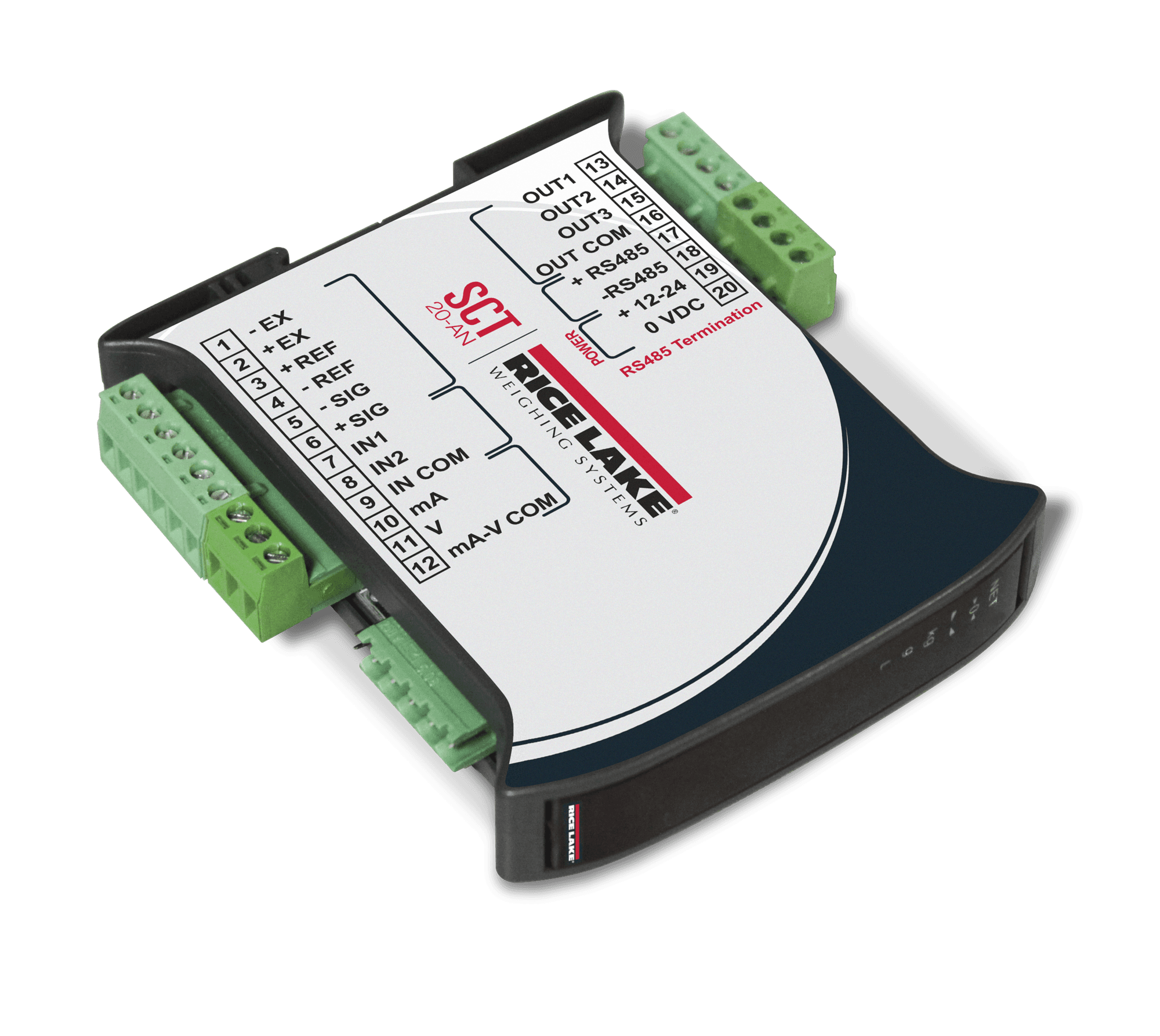
Click image to enlarge and zoom.
Dimensions
4.72 × 4.52 × 0.98 in (120 × 115 × 25 mm), catalog outside dimensions.
Construction
NEMA Type 1 plastic enclosure with pluggable connectors; vertical DIN-rail mounting inside an electrical panel.
Operating Temperature
−20 to 60 °C (−4 to 140 °F).
Connectivity
Analog, DeviceNet, PROFIBUS, EtherNet/IP, Ethernet TCP/IP or Modbus/TCP by exact configuration; RS-232 transmit-only or RS-485 half-duplex serial port.
Power Supply
12–24 VDC, ±10% per technical manual; external supply required.
Approvals & CertificationsNational Type Evaluation Program (NTEP)
- National Type Evaluation Program (NTEP)14-083; Class III; nmax 5,000.
Delivered product may vary depending on model and options selected.
Data Communication
Rice Lake SCT-20 Signal Conditioning Transmitter
- Connect load cells to an external controller through a compact DIN-rail weight transmitter.
- Select analog, DeviceNet, PROFIBUS, EtherNet/IP, Ethernet TCP/IP or Modbus/TCP output by configuration.
- Read weight and setup information on the six-digit LED display.
- Use theoretical, live-weight or linearity calibration and push-button or preset tare.
- Connect two digital inputs and three relay outputs; choose RS-232 transmit-only or RS-485 half-duplex serial communication.
Select a configuration
Files & Downloads
Referenced media is copyright its respective owners. See individual materials for attribution. Media rights
SCT-20 Technical Manual, Rev. MPDFRice Lake SCT-20 Signal Conditioning Transmitter
Compact DIN-rail weight transmitter with configuration-specific analog or fieldbus outputs, two digital inputs, three relay outputs and serial communication.
SCT-20 supplies load-cell excitation and sends weight data to external control systems. Six separately listed hardware configurations remain distinct. Optional power supplies are separately sourced; the manual document number is not a hardware Variant. Current dual-port hardware is distinguished from discontinued single-port EtherNet/IP in the source revision history.
Related Products
View all Data Communication
Conveyor Belt Scales
WalzLink-4G Wireless Plug-n-Play Module
The WalzLink-4G is a modular wireless plug-n-play connectivity solution designed specifically for wheel loader, lift truck, skid steer and conveyor belt scales enabling seamless, real-time transmission of load-out data in PDF format.
Data Communication
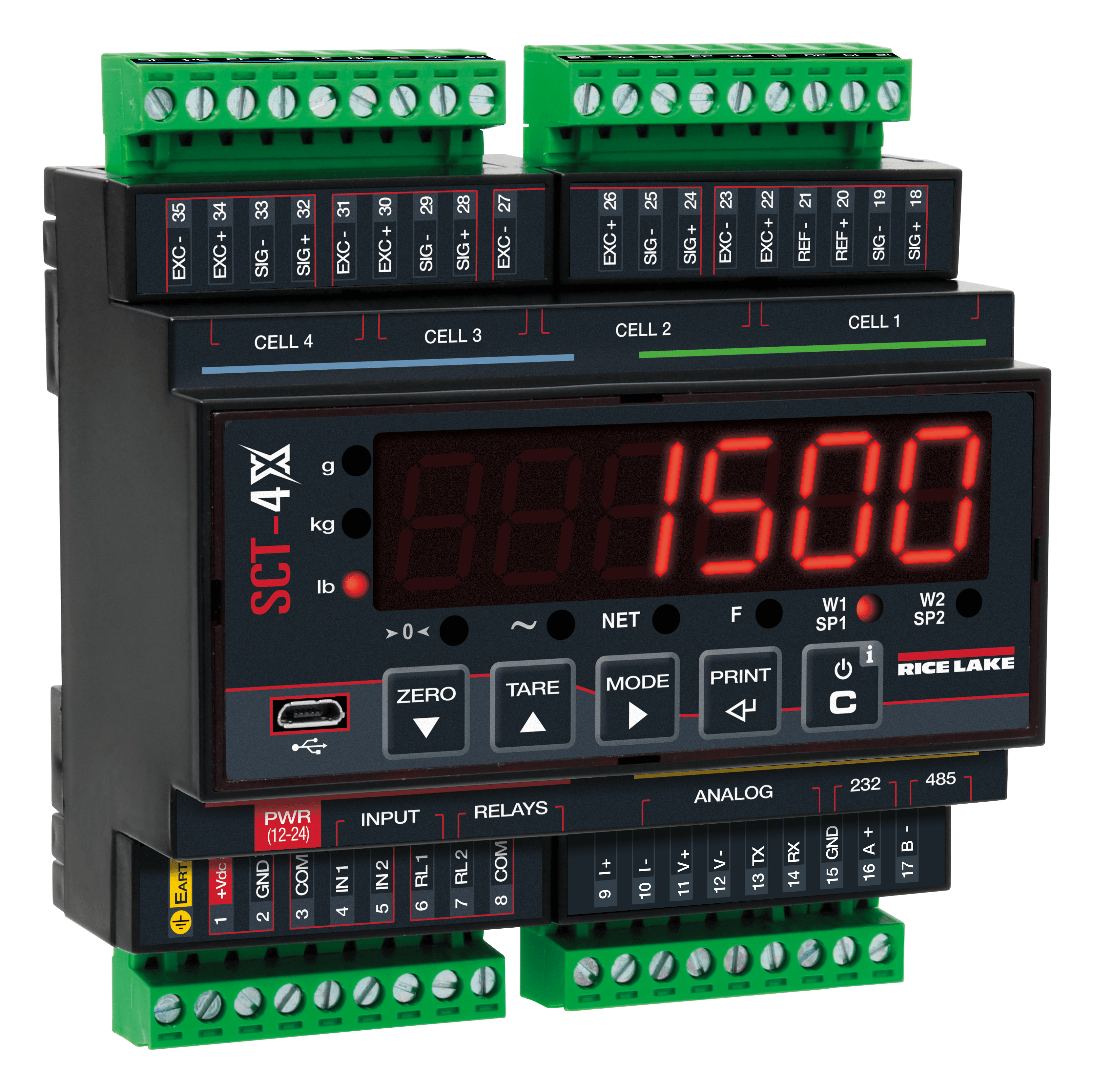
Rice Lake SCT-4X Integrated Fieldbus Transmitter
Four-channel DIN-rail weight transmitter with model-specific analog, EtherNet/IP, Modbus TCP or PROFINET interfaces and micro-USB configuration.
Data Communication
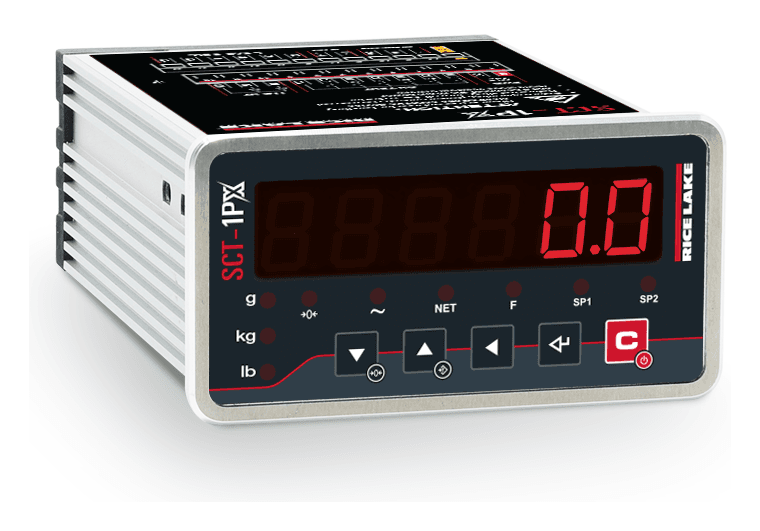
Rice Lake SCT-1PX Transmitter with Integrated Fieldbus and Web Server
Panel-mount single-channel weight transmitter with micro-USB configuration and model-specific analog, EtherNet/IP, PROFINET or Modbus TCP interfaces.