Why Agriculture Belt Scale Solutions Are Essential for Modern Crop Handling
Agriculture belt scale solutions are the most practical way to weigh bulk crops and raw materials continuously — without stopping the line.
If you're looking for a quick answer on what these systems do and where they fit, here's the short version:

Agricultural Belt Scale Use Cases and Expected Accuracy
What agriculture belt scale solutions are used for:
- Weighing grain, soybeans, rice, flour, peas, cauliflower, and sugar cane during conveying
- Tracking inventory in real time at intake, processing, and load-out points
- Feeding accurate weight data into automation systems, PLCs, and cloud platforms
- Measuring flow rates (tons per hour) and totalized weight for process control
- Meeting legal-for-trade requirements when selling or transporting bulk commodities
Accuracy you can expect:
| Scale Type | Typical Accuracy | Best For |
|---|---|---|
| Single-roller | ~1% | Internal process control |
| Multi-roller | ~±0.25% | Legal-for-trade, high-precision use |
High demand and rising labor costs are pushing agricultural operations to find faster, more reliable ways to move and measure product. A conveyor belt scale solves that problem by weighing material while it moves — delivering real-time data with no slowdown in throughput.
The market reflects this shift. The global belt scale industry is projected to grow from $1.85 billion in 2025 to $3.06 billion by 2035, at a CAGR of 5.16%. Agriculture is one of the core drivers of that growth, alongside mining and food processing.
This guide covers everything operations managers need to know — from choosing the right scale type to maintenance, automation integration, and regulatory compliance.
The Role of Conveyor Weighing in Modern Agriculture
In any busy agricultural facility, knowing exactly how much product is moving through your facility is the difference between a profitable season and a logistical headache. Traditional static weighing methods require trucks to stop, uncouple, and wait on a scale platform. While static scales have their place, relying on them for every step of your process creates massive bottlenecks.

This is where continuous, in-motion agriculture belt scale solutions shine. Installed directly onto your existing conveyor systems, these scales measure the mass of bulk materials as they travel along the belt.
These scales are particularly dominant in the bean and grain markets. For example, in large-scale soybean operations, conveyor scales are heavily used at critical load-out points. As soybeans are fed into trucks bound for processing plants or export terminals, the scale continuously monitors the flow, ensuring that every truck is filled to its maximum legal capacity without risking costly overloads.
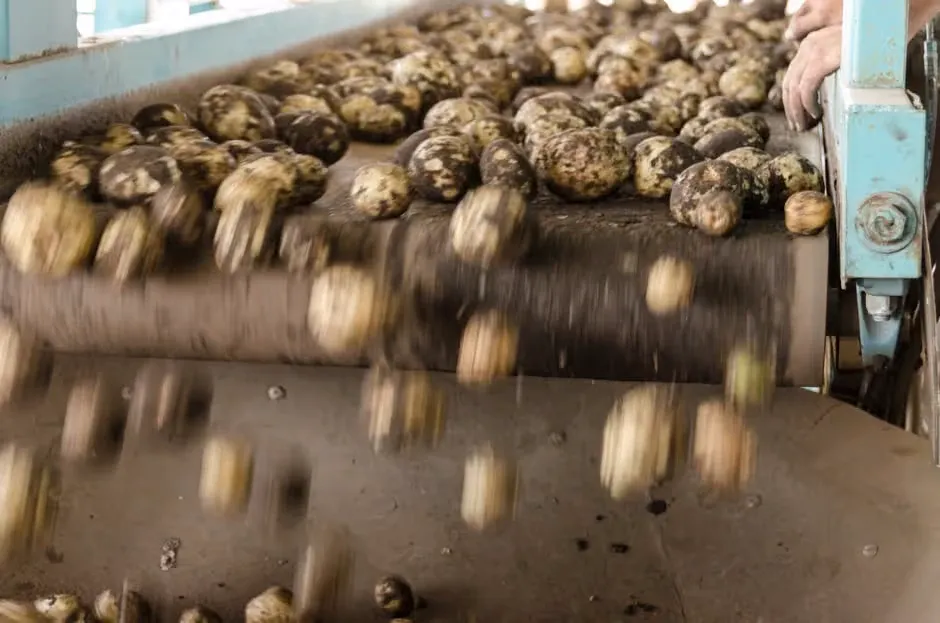
Beyond soybeans, conveyor-based weighing is widely utilized across a diverse range of agricultural applications in the Agriculture Industry. Whether you are managing delicate peas, heavy sugar cane, rice, flour, grain, or even freshly harvested cauliflower, Conveyor Belt Scales keep your facility running smoothly by providing:
- Instant Inventory Tracking: Know exactly how many tons of product are sitting in your silos, bins, or flat storage at any given moment.
- Unmatched Load-Out Accuracy: Eliminate the guesswork when loading railcars, barges, or trucks, protecting your business from both under-filling (losing money) and over-filling (facing safety and regulatory fines).
- Process Efficiency: Monitor the flow rate (tons per hour) to optimize upstream and downstream processing machinery, preventing equipment overloads and minimizing material waste.
Single-Roller vs. Multi-Roller Conveyor Scales
When selecting a conveyor scale, one of the most critical decisions you will make is choosing between a single-roller (or single-idler) configuration and a multi-roller configuration. The choice directly impacts your system's accuracy, installation complexity, and overall cost.
| Feature | Single-Roller Scales | Multi-Roller Scales |
|---|---|---|
| Typical Accuracy | Approximately 1.0% | Approximately +/-0.25% |
| Primary Use Case | Internal process tracking, throughput monitoring, blending | Legal-for-trade transactions, custody transfer, high-precision inventory |
| Installation Footprint | Small, compact, fits easily on short conveyors | Larger, requires a longer straight run of conveyor |
| Cost | Budget-friendly, lower initial investment | Higher initial investment, justified by precision savings |
| Calibration Frequency | Moderate | Low (highly stable over long periods) |
Single-Roller Scales: The Practical Workhorse
Single-roller scales utilize one weighing idler suspended from load cells. Because they are compact, they are incredibly easy to install on existing conveyor structures with minimal modifications.
For internal process control, such as monitoring the feed rate of raw grain into a milling line or tracking the volume of animal feed being mixed, a single-roller scale's 1% accuracy is highly effective and cost-efficient.
Multi-Roller Scales: The Precision Standard
If your business involves buying, selling, or loading out high-value commodities where every pound counts, a multi-roller scale is the gold standard. By distributing the weight across two, three, or even four idlers, these systems minimize the mechanical errors caused by belt tension variations and conveyor vibration.
This structural stability allows multi-roller scales to achieve an exceptional accuracy of +/-0.25%. Because of this precision, multi-roller configurations can be certified under strict international standards, such as OIML R 50 Class 0.5, 1, or 2, making them suitable for commercial, legal-for-trade use where applicable.
For specialized processing lines that require high-capacity, heavy-duty material regulation, these scales are often paired with advanced industrial feeding systems. Integrating high-precision scales with heavy-duty weigh belt feeders ensures that modern engineering maintains precision even under extreme material loads.
Selecting the Right Agriculture Belt Scale Solutions for Your Facility
No two agricultural facilities are identical. A grain terminal in the Midwest faces entirely different operating conditions than a vegetable processing plant or a sugar cane mill. To ensure your scale performs reliably year after year, keep these key selection criteria in mind.

Durability in Harsh Environments
Agricultural environments are notoriously tough on machinery. Your scale must be built to withstand:
- Dust: Grain dust, flour, and starch can quickly penetrate sensitive electronics if they aren't properly protected. Look for load cells and speed sensors with high IP (Ingress Protection) ratings, such as IP67 or IP69K.
- Moisture and Washdown Requirements: If you are processing fruits, vegetables, or sugar cane, your conveyor lines will require frequent, high-pressure washdowns. In these environments, stainless steel frame construction (AISI 304 or 316) is non-negotiable to prevent rust and corrosion.
- Vibration: Heavy machinery, agricultural tractors, and grain dryers create constant ground vibration. High-quality scales feature advanced mechanical filtering or pivot-based designs that isolate the weight of the material from external structural noise.
Material Characteristics and Hygiene Standards
The material you are weighing dictates the physical design of the conveyor and scale. For food-grade applications, such as handling flour, starch, or packaged peas, the scale must feature food-grade PVC or PU belts, open frames that prevent material accumulation, and sanitary welds that comply with strict food safety regulations.
Key Features of Modern Agriculture Belt Scale Solutions
When evaluating different manufacturers, pay close attention to the core technologies inside the scale:
- Modular and Self-Aligning Load Cells: Advanced systems feature patented self-aligning modular load cell designs. This design allows for easy weighbridge expansion if your capacity needs grow, while drastically reducing the need for constant, tedious re-calibration.
- High-Resolution Speed Encoders: A belt scale cannot calculate total weight without knowing exactly how fast the belt is moving. High-quality tail-pulley-mounted encoders or friction wheel tachometers track the exact speed of the belt in real time, automatically compensating for any belt slippage or motor fluctuations.
For a system that combines these heavy-duty features with straightforward field installation, the Industrial Belt Scale WM100-BS represents a highly reliable, industry-proven option for agricultural operations looking to upgrade their process monitoring.
Integrating Agriculture Belt Scale Solutions with Automation and Cloud Software
Gone are the days of a operator standing next to a conveyor with a clipboard, manually writing down numbers from an analog dial. Modern agricultural operations rely on seamless data flow.
Today’s belt scale integrators are designed to plug directly into your plant’s control network. Using communication protocols like Modbus, Ethernet/IP, or Profibus, the scale transmits real-time flow rates (tons per hour) and totalized weight directly to your central PLC or SCADA system.
Furthermore, cloud-based monitoring platforms allow farm managers and facility operators to track production metrics from anywhere in the world. Whether you are sitting in the office or checking your smartphone in the field, you can monitor live load-out speeds, receive automated alerts if a belt runs empty, and log historical data for simplified inventory reconciliation.
Essential Maintenance and Calibration Best Practices
Even the most advanced, expensive belt scale will lose its accuracy if it is neglected. Because a conveyor belt is a dynamic, moving structure under constant tension, regular maintenance is the absolute key to long-term reliability.
Common Conveyor Belt Scale Maintenance Tasks
To keep your system running at peak performance, establish a routine maintenance schedule that covers these essential tasks:
- Keep it Clean: Dust, dirt, and spilled crop material can build up under the scale frame or on the load cells, creating "material bridging" that skews weight readings. Regularly clean the weighing area.
- Monitor Belt Tension and Alignment: A loose or misaligned conveyor belt will introduce mechanical errors into your weight readings. Ensure your conveyor's automatic gravity take-up or mechanical tensioning system is functioning correctly, and check that the belt runs perfectly centered over the scale idlers.
- Inspect the Rollers (Idlers): Ensure that the rollers on the weighing platform spin freely. A seized or worn-out roller will drag against the belt, causing artificial weight spikes.
- Sensor and Cable Checks: Periodically check the wiring from the load cells and speed sensors to the integrator. Look for signs of wear, rodent damage, or moisture ingress.
Calibration Best Practices
How often should you calibrate? As a rule of thumb, a conveyor scale should be verified during commissioning and checked at regular intervals depending on your usage intensity. For high-volume load-out systems, weekly or monthly checks are common.
Calibration can be performed using:
- Test Weights: Applying known physical weights directly to the scale suspension system.
- Material Tests: The absolute most accurate way to calibrate. Run a physical batch of material over the conveyor belt scale, dump it into a certified static scale (such as a truck scale), and compare the two readings to fine-tune the belt scale’s calibration factor.
Alternative and Complementary Weighing Technologies
While conveyor belt scales are incredibly efficient, they are often part of a much larger weighing ecosystem within an agricultural business. Depending on your specific facility layout, you may want to combine conveyor weighing with other advanced technologies.
Volumetric Load Scanning
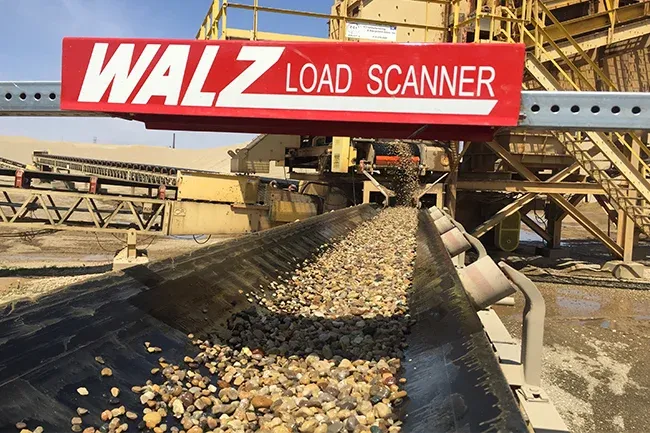
For some materials—especially highly irregular, low-density, or wet bulk materials—measuring volume can be incredibly helpful alongside weight. By integrating Conveyor Belt Volume Scanning systems, operations can use advanced laser scanners to build a real-time 3D profile of the material on the belt. This allows you to monitor material distribution and detect belt overloading before it causes a mechanical failure.
Heavy-Duty Truck Scales
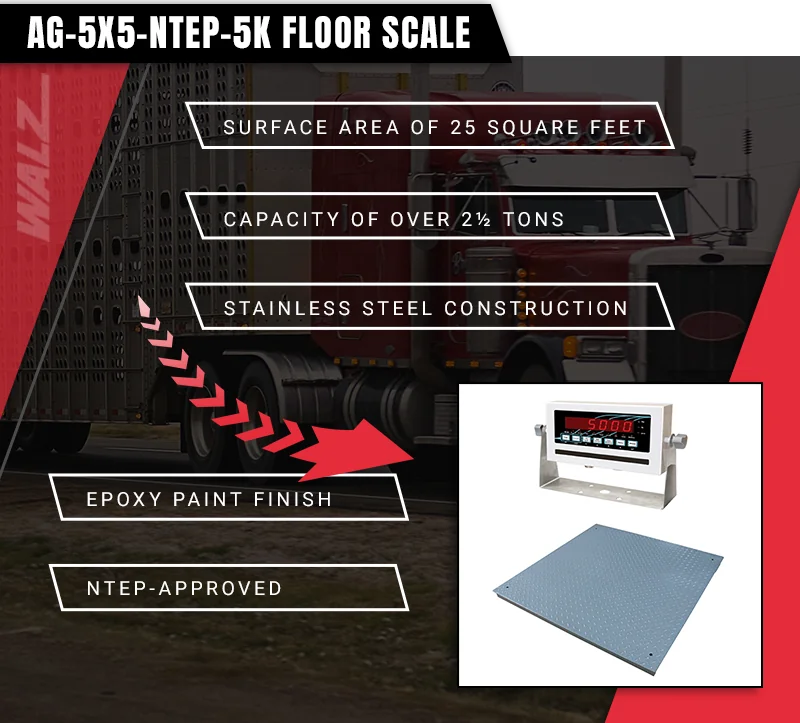
Conveyor scales tell you how fast material is moving inside your plant, but Agriculture Truck Scales remain the ultimate authority for incoming and outgoing road transport. Combining conveyor scales with highly accurate truck scales allows you to verify your internal inventory numbers against official gate receipts, creating a closed-loop tracking system that virtually eliminates material shrinkage.
Frequently Asked Questions about Agricultural Conveyor Scales
How accurate are conveyor belt scales in agricultural applications?
In real-world agricultural environments, a single-roller scale typically achieves an accuracy of around 1.0%, making it ideal for internal process control, blending, and feed monitoring. A multi-roller scale, which distributes the load across multiple idlers to minimize belt tension errors, can achieve an exceptional accuracy of ±0.25%.
Can conveyor belt scales be used for legal-for-trade transactions?
Yes, but only specific configurations. To use a conveyor scale for commercial billing or trade, it must be a multi-roller design certified to meet international standards such as MID OIML R50 (Class 0.5 or 1) or local NTEP requirements. Additionally, the entire conveyor system must be designed and maintained according to strict legal-for-trade guidelines.
How often do agricultural belt scales require calibration?
The frequency of calibration depends heavily on your accuracy requirements and operating conditions. For internal process monitoring, a monthly or quarterly check is often sufficient. For high-capacity, legal-for-trade load-out facilities, operators often perform quick weekly verification checks using test weights or material runs to ensure absolute precision.
Conclusion
Upgrading your crop handling facility with modern agriculture belt scale solutions is one of the fastest ways to eliminate bottlenecks, prevent product giveaway, and streamline your daily operations. Whether you are running a high-speed soybean load-out terminal or managing delicate food-grade vegetable processing lines, continuous in-motion weighing keeps your business moving forward.
At Walz Scale, we have spent nearly 60 years engineering heavy-duty, highly reliable weighing solutions for the world’s toughest industries. Our NTEP-certified, legal-for-trade scale systems are backed by a global service network, ensuring that your farm or processing plant stays accurate, compliant, and profitable through every single harvest.
Ready to find the perfect scale configuration for your conveyor setup? Explore our complete lineup of Conveyor Belt Scales or contact the experts at Walz Scale today to discuss your application.