The Problem With How Most Operations Measure Bulk Material Loads
Volumetric load measurement systems are laser-based scanning solutions that calculate the exact volume of material loaded onto a truck, railcar, or conveyor belt — without stopping the vehicle or using contact-based weighing hardware.
Quick answer for operations managers comparing options:
| System Type | How It Measures | Stops Traffic? | Legal-for-Trade? | Key Weakness |
|---|---|---|---|---|
| Volumetric load scanner | 3D laser/LiDAR profile | No | Yes (NTEP certified options available) | Requires known material density for weight conversion |
| Static weighbridge | Weight via load cells | Yes | Yes | Throughput bottleneck, high maintenance |
| Dynamic (in-motion) scale | Weight at speed | No | Yes | Mechanical wear, regular calibration needed |
| Belt scale | Weight on conveyor | N/A | Limited | Drift, frequent recalibration |

If your operation moves bulk material — aggregate, ore, grain, waste, or anything in between — how you measure those loads has a direct impact on your revenue, compliance, and fleet efficiency.
Traditional scales have done the job for decades. But they come with real costs: calibration downtime, mechanical wear, throughput slowdowns, and disputes over what was actually hauled.
That's where volumetric scanning changes the equation.
Modern systems can scan a fully loaded haul truck moving at up to 10 MPH, generate a 3D image of the load, calculate carried volume, and push a load ticket — all in seconds, with no vehicle contact and no stopping.
Accuracy matters here too. Leading systems achieve ±1% measurement accuracy, and the most advanced truck scanning systems have earned NTEP Legal-for-Trade certification — meaning the data holds up for billing, compliance, and dispute resolution.
This guide compares the major volumetric load scanning systems on the market, breaks down how they work, and helps you match the right technology to your operation.
Why Operations Are Shifting to Volumetric Load Measurement Systems
For generations, the default way to measure bulk material was to weigh it. While weight is a reliable metric for highway weight compliance, it is often a poor proxy for managing actual material volume.
Bulk materials are notoriously sensitive to environmental changes. A cubic yard of sand sitting in a dry quarry weighs significantly less than that same cubic yard of sand after a heavy summer downpour. If you bill strictly by weight, you are either overcharging your customers for water retention or underestimating your actual inventory depletion.
By shifting to Volumetric Load Scanners, operations can track material by its true cubic volume (or cubic meters), completely removing moisture variables from the equation.
Beyond moisture, volumetric scanning solves several chronic operational headaches:
- Eliminating Carryback: When sticky materials like clay or wet ore cling to the bottom of a truck bed after dumping, it is called carryback. Traditional scales weigh the truck empty at the start of the day and assume it returns to that baseline weight. If 2 tons of material are stuck in the bed, the scale registers a false payload on the next run. Volumetric scanners detect carryback instantly by scanning the "empty" bed on its return trip.
- Optimizing Shovel and Fleet Matching: Underloading a haul truck by just 10% can decimate an operation's efficiency, requiring more trips, burning more fuel, and increasing site emissions. Conversely, overloading accelerates tire wear and risks structural damage. Volumetric systems provide immediate feedback on the fill factor, allowing operators to adjust their loading patterns in real time.
- Accurate Density Calculations: When you combine real-time volumetric data with in-motion weight data, you unlock the holy grail of bulk logistics: live material density. This allows operations to monitor material consistency and adjust processing equipment on the fly.
How Volumetric Load Measurement Systems Work
The magic behind a volumetric load scanner lies in non-contact LiDAR (Light Detection and Ranging) and advanced laser profiling. The system relies on a straightforward, three-step operational flow:
- Establish the Reference: Before a vehicle can be measured, the system needs to know what it looks like empty. The scanner captures a detailed 3D profile of the empty truck bed, railcar, or baseline conveyor belt. This digital "empty profile" is saved in the database.
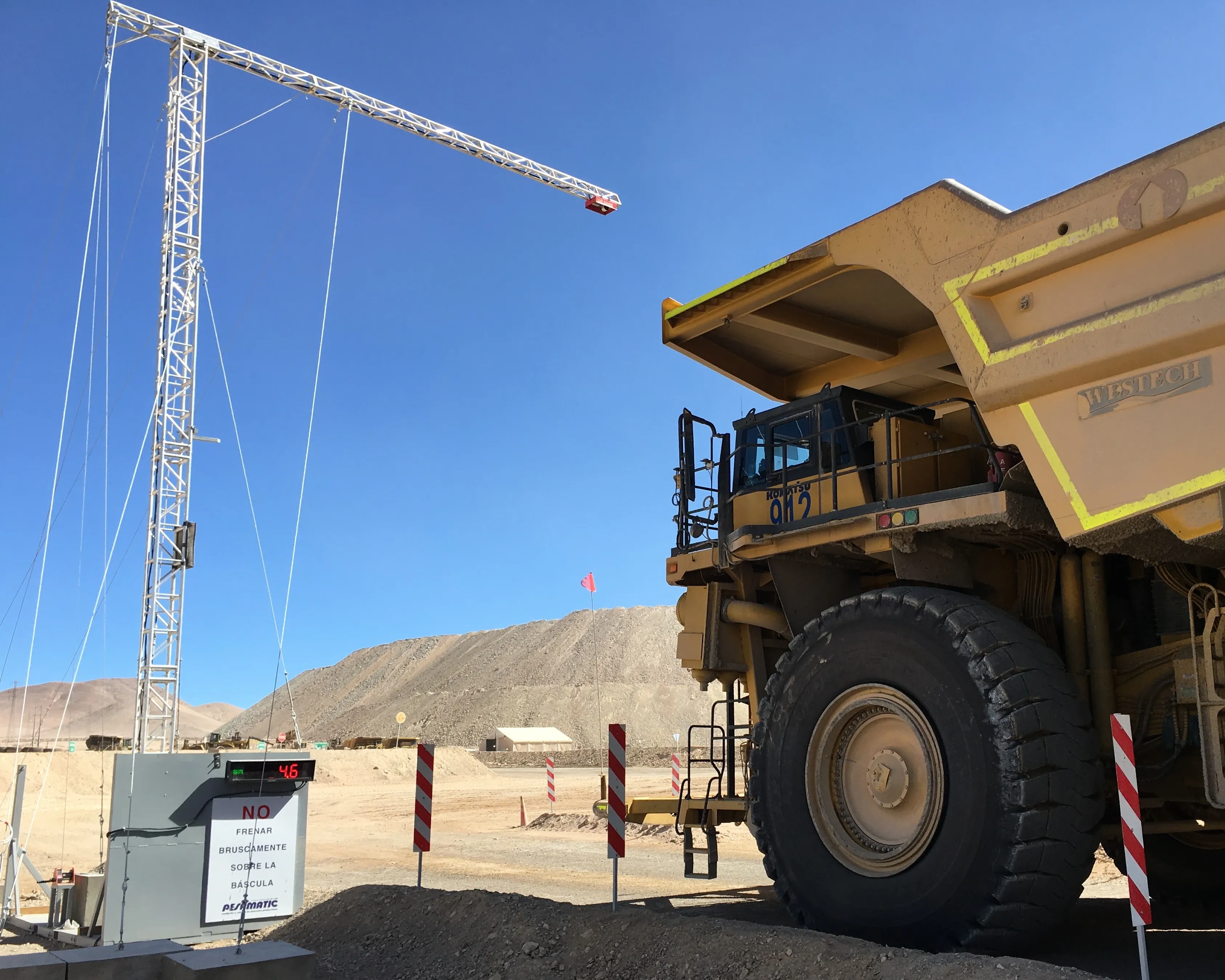
- Scan the Loaded Material in Motion: As the loaded vehicle passes beneath the elevated scan head at speeds up to 10 MPH, the scanner fires thousands of eye-safe laser pulses per second. These sensors measure the distance to the material surface, constructing a highly detailed, three-dimensional model of the load in real time.
- Turn Scans into Operational Decisions: The software compares the loaded 3D scan against the stored empty reference profile. By calculating the difference between the two profiles, the system determines the exact volume of the material with a resolution of up to 0.1 to 0.2 cubic yards.
For operations managing a consistent fleet, systems like the WLS Industrial Volumetric Load Scanner automate this entire sequence, matching the incoming scan to the vehicle's registered ID in milliseconds.
Comparing Volumetric Load Measurement Systems to Traditional Scales
To understand why operations are making the switch, it helps to look at the hidden costs of traditional weighing hardware.
Physical scales are subject to immense mechanical stress. A heavy-duty truck scale or a conveyor belt scale experiences constant friction, impact, and wear. Over time, this physical abuse causes the sensors to drift, requiring frequent calibration.
In high-throughput environments like diamond mining or heavy quarrying, taking a scale offline for calibration can cost millions of dollars in lost production. If a belt scale calibration takes four hours, and the plant's production revenue is valued at a high hourly rate, that routine maintenance becomes an incredibly expensive endeavor.
| Feature | Static Weighbridges | Dynamic (In-Motion) Scales | Volumetric Load Scanners |
|---|---|---|---|
| Primary Metric | Mass (Weight) | Mass (Weight) | Volume (Cubic Space) |
| Mechanical Wear | High (constant physical contact) | Medium to High | None (completely non-contact) |
| Calibration Frequency | Semi-annual to quarterly | Frequent | Infrequent (optical calibration only) |
| Installation Time | Weeks (requires extensive concrete work) | Days to weeks | Hours to days |
| Vulnerability to Weather | High (debris, ice, temperature drift) | High (tension variations, moisture) | Extremely low (sealed optical sensors) |
| Throughput Impact | Severe (trucks must stop completely) | Minimal (slow roll required) | None (scan at up to 10 MPH) |
Because optical scanners have no moving parts and never touch the material or the vehicle, they do not suffer from mechanical wear patterns. They deliver consistent, repeatable measurements month after month without the drift associated with load cells.
For a deeper dive into how these technologies compare head-to-head, explore our guide on Dynamic vs Static Weighing vs Volumetric Scanning.
Key Applications Across Bulk Material Industries

Every bulk material has its own unique physical properties, and different industries face distinct logistical challenges. Volumetric scanners are highly adaptable, with specialized configurations designed for mining, construction, agriculture, and logistics.
By utilizing targeted scanner families — such as the WLS Mining Volumetric Load Scanner for off-road haulers or the WBS Belt Volumetric Load Scanner for conveyor systems — operations can tailor the technology to their specific material flow.
Mining and Quarry Payload Management
In open-pit and underground mining, haul truck optimization is the difference between a highly profitable quarter and a budget deficit. Shovel operators must load massive haul trucks as close to their rated capacity as possible without exceeding safety limits.
Using Mining Haul Truck Volumetric Payload Scanning, mine managers gain a clear window into their loading operations. The system generates real-time 3D graphical load imagery that shows exactly how the material is distributed in the truck body.
If a shovel operator consistently places the load too far forward, it puts excessive wear on the front struts and tires. If the load is off-center, it compromises vehicle stability on haul roads. The visual feedback from the scanner acts as an immediate training tool for loader and shovel operators, ensuring perfect load distribution on every pass.
Additionally, mining operations use volumetric scanners to analyze material fragmentation. Understanding the size distribution of blasted rock before it reaches the crusher helps optimize the crushing process and reduces downstream energy consumption.
Conveyor Belt and Rail Logistics
Conveyor belts are the arteries of bulk material processing. Traditional belt scales are notoriously finicky, prone to errors caused by belt tension, idler misalignment, and structural vibration.
By implementing Conveyor Belt Volume Scanning, operations can transition to contact-free volume flow measurement. Laser sensors scan the profile of the material on the moving belt, calculating the cross-sectional area and multiplying it by the belt speed to deliver continuous, real-time volume flow data.
This approach is highly effective for monitoring feed rates to crushers, tracking stockpile inventory, and managing port-loading operations where conveyor widths can reach up to 3200 mm and speeds can exceed 16 m/s.
For rail logistics, the challenges are scaled up. Railcars must be loaded efficiently to maximize train lengths without risking derailments or over-axle limits.
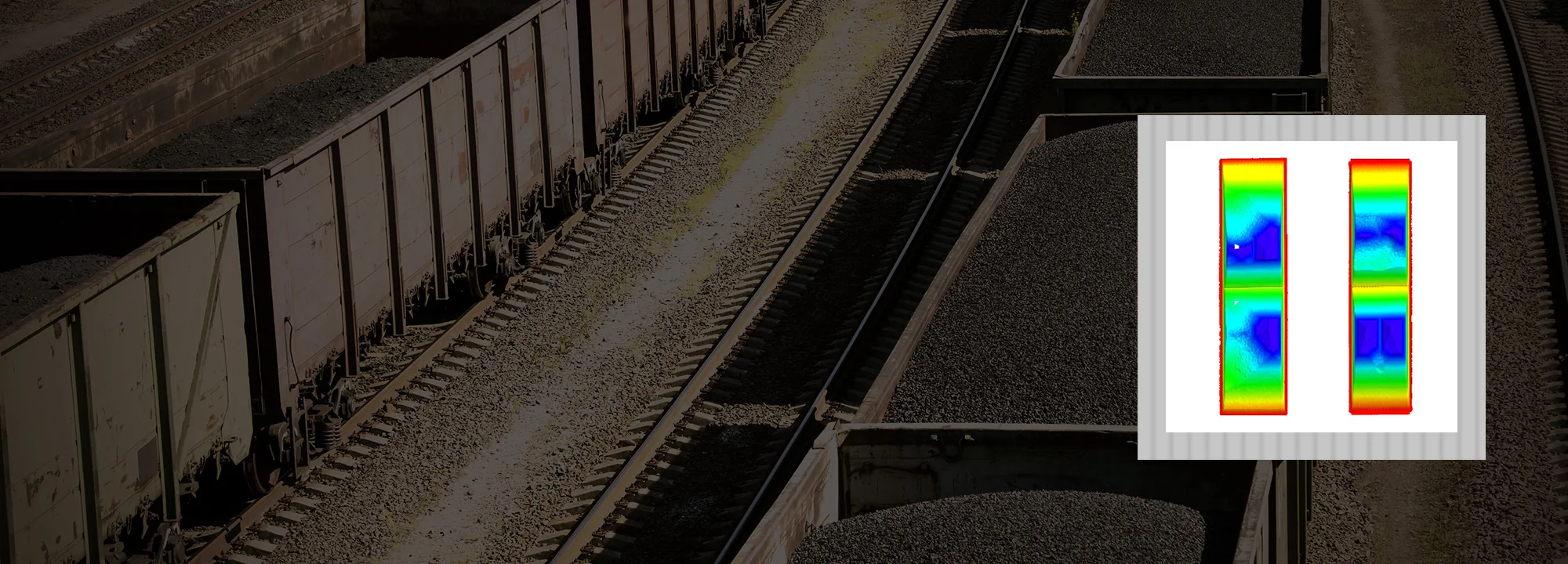
Using the WLS Rail Volumetric Load Scanner, operations can scan entire trains in motion. The system provides high-precision measurements for individual cars, allowing operators to verify fill factors and prevent uneven loading across the entire manifest.
Whether you are loading coal, grain, or iron ore, Railcar Load Volume Scanning ensures your rail logistics remain safe, compliant, and fully optimized.
Critical Features to Look For in a Scanner System
When evaluating volumetric load measurement systems, it is easy to get lost in sensor specifications and laser frequencies. However, the true value of a system lies in its real-world usability, certification, and software integration.
If you are looking to deploy a scanner in a busy, high-throughput yard, you need a system that fits seamlessly into your existing truck lanes and reporting workflows. For a comprehensive look at how these systems integrate into daily operations, check out our resource on Industrial Truck Load Volume Scanning.
Legal-for-Trade Certification and Accuracy
Historically, volumetric scanning was used primarily for internal process control and estimation. That changed with the introduction of NTEP (National Type Evaluation Program) certified volumetric scanners.
An NTEP Certificate of Conformance (such as Certificate 24-001P) designates a volumetric scanner as "Legal-for-Trade." This means the system's measurements are legally defensible and can be used directly for customer billing, commercial transactions, and regulatory compliance.
For operations that sell materials by volume — such as mulch, topsoil, gravel, or compost — having a certified ticketing system is a massive competitive advantage. It eliminates disputes over load sizes, builds trust with customers, and ensures you are paid for every cubic yard that leaves your facility.
Integration with RFID and Ticketing Software
A scanner is only as good as the data it shares. To maximize your investment, your volumetric scanner should act as an integrated node in your site's digital ecosystem.
Modern systems utilize a variety of automation tools to streamline the scanning process:
- RFID and License Plate Recognition: As a truck approaches the scanner gantry, RFID readers or HD cameras automatically identify the vehicle and retrieve its empty reference profile from the database.
- Automated Ticketing Kiosks: Drivers can interact with rugged, outdoor kiosks to select material types, print load tickets, or sign off on deliveries. To see how these kiosks integrate with site logistics, read about Automated Ticketing Kiosks for Vehicle Management.
- Cloud-Based Reporting: Scan data, 3D images, and transaction records are pushed instantly to cloud platforms like Payload Pro. This allows managers to monitor production rates, fleet efficiency, and inventory levels from any device, anywhere in the world.
Frequently Asked Questions About Volumetric Scanning
Can volumetric scanners operate in harsh weather conditions like dust, rain, or extreme temperatures?
Yes, high-quality volumetric scanners are engineered specifically for the world's most brutal industrial environments.
Leading systems feature rugged enclosures with IP6K9K ratings, meaning they are completely sealed against dust ingress and can withstand close-range, high-pressure washdowns. To combat airborne interference like heavy dust, thick fog, rain, or snow, advanced systems utilize multi-echo laser technology (such as Echo-5 processing). This allows the sensor to filter out reflections from dust particles or raindrops, ensuring it only measures the true surface of the material load.
Additionally, these systems are designed to operate across extreme temperature ranges, typically from -25 °C to +70 °C, making them equally at home in arctic mining operations or scorching desert quarries.
Do trucks need to come to a complete stop to be scanned?
No. One of the primary benefits of a volumetric load scanner is its ability to perform high-speed, in-motion scanning.
Trucks simply drive slowly under the scanner gantry at a steady speed of up to 10 MPH. The system captures the 3D profile of the bed and calculates the volume in real time as the vehicle passes through. This eliminates the bottlenecks associated with static weighbridges, where trucks must stop, wait for the scale to settle, print a ticket, and then accelerate away.
How are volumetric scanners calibrated and maintained compared to physical scales?
Because optical volumetric scanners are completely non-contact, their maintenance requirements are incredibly low compared to physical scales.
There are no load cells to wear out, no deck structures to bind with dirt or ice, and no mechanical parts subject to friction. Calibration is an optical process rather than a physical one. Instead of requiring heavy test trucks or test weights to calibrate physical load cells, a volumetric scanner is calibrated using a simple, automated software routine that verifies the sensor's spatial alignment.
This "zero-wear" design translates to an estimated 80% reduction in ongoing maintenance costs compared to traditional weighing systems.
Choosing the Right Volumetric Scanner for Your Operation
Selecting the ideal volumetric scanning setup requires matching the technology to your site's physical layout, fleet characteristics, and throughput goals.
Walz Scale offers a highly configurable range of solutions, from entry-level systems for closed fleets to fully certified, high-speed systems for commercial billing.
- Fixed Gantry Mounts: Best for permanent installations with dedicated, high-volume traffic lanes.
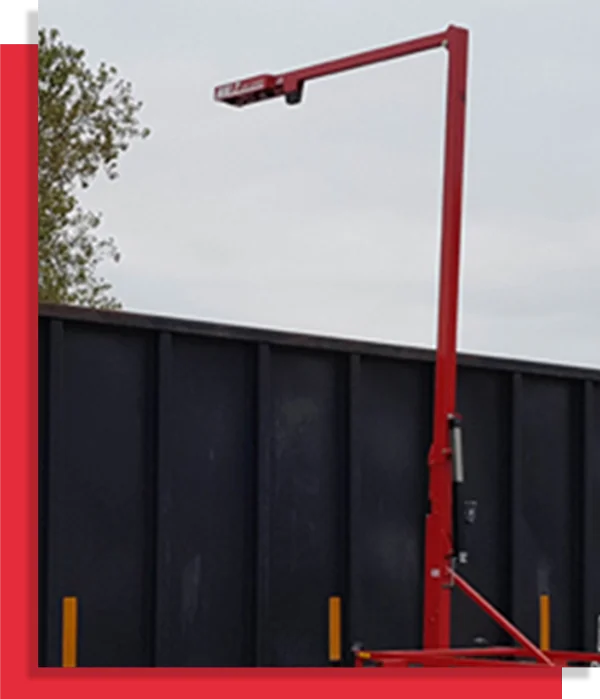
- Portable & Trailer-Mounted Systems: Ideal for temporary job sites, road construction, or seasonal operations. These systems can be set up and fully operational in less than 30 minutes.
- Integrated Solutions: For operations that require both weight and volume data, combining a volumetric scanner with dynamic wheel-load weighers or heavy-duty truck scales provides the ultimate dual-metric payload management system.
Investing in a volumetric load scanner is about more than just buying a sensor; it is about reclaiming lost production time, eliminating customer disputes, and optimizing your fleet's carrying capacity.
To explore how this technology can transform your specific bulk material workflow, read more about the Volumetric Load Scanner Advantage or contact our team of application specialists today.